Inshore dive departure
Boat time depends on the selected site
Inshore options can suit training, refreshers, or divers who want a shorter approach. Ask how the operator assesses conditions and groups experience levels.
Bahía de Banderas · Guided scuba diving
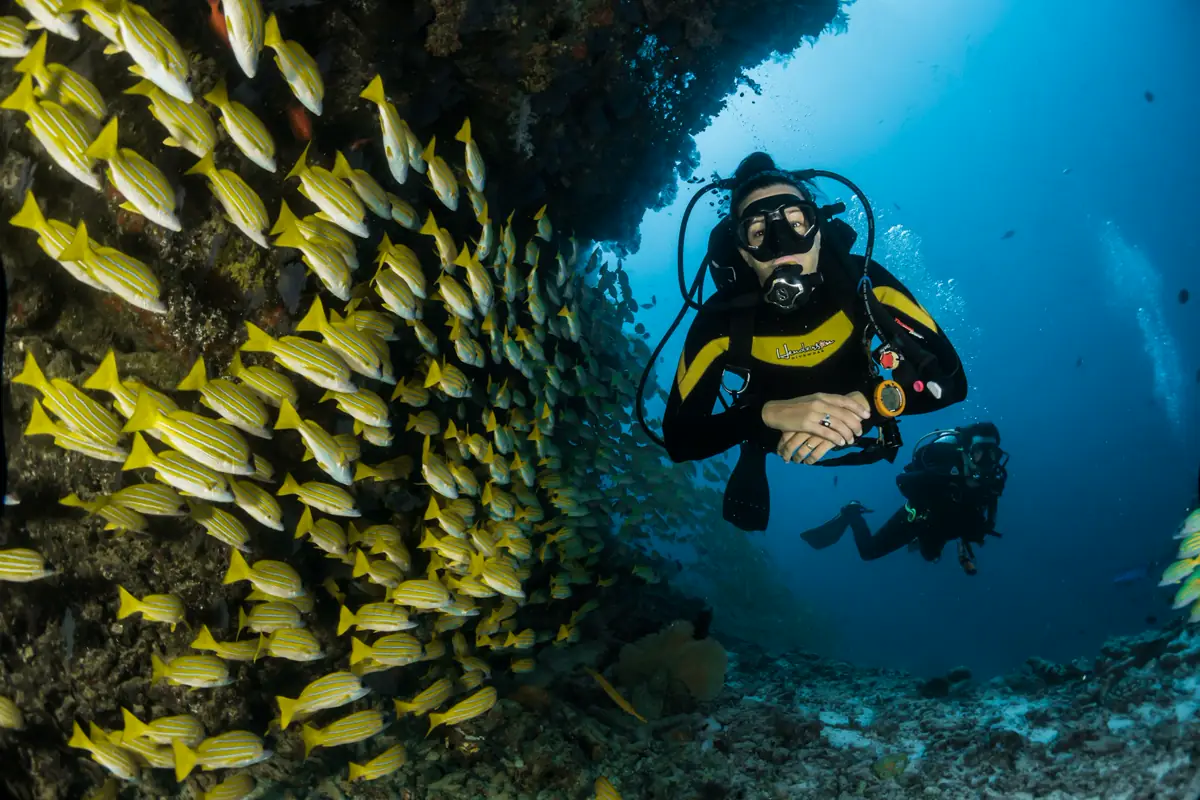
Puerto Vallarta scuba diving is about rocky reef, volcanic structure, and the changing underwater personality of Banderas Bay. The right trip matches your certification, recent experience, and comfort in the day’s conditions with a qualified local dive team.
Below the surface of the bay
Choose a dive plan that matches your experience level, from quieter inshore training water to more demanding offshore sites.
Browse tripsChoosing a dive area
Banderas Bay offers calmer inshore areas as well as deeper, more exposed sites. Los Arcos and the Marietas are among the better-known names, but current, weather, certification, and the operator’s plan decide what is appropriate.
Boat time depends on the selected site
Inshore options can suit training, refreshers, or divers who want a shorter approach. Ask how the operator assesses conditions and groups experience levels.
Longer travel and more exposure
Offshore sites may involve stronger current and a more advanced plan. Confirm certification requirements, recent-dive expectations, gear, and backup options before you reserve.
What a dive day can include
A good dive operator makes expectations clear before the boat leaves the marina.
Explore rocky structure, reef edges, and swim-through-style terrain with a guide who knows the day’s safe route and current patterns.
A dive is better when certification, recent experience, and comfort level guide the site choice instead of the other way around.
Maintain good buoyancy, keep hands off the reef, and never chase or feed marine life. The best photographs come from giving the underwater world room.
Bring your certification information if required and be open about your recent experience, comfort level, and health considerations.
Review the planned site, hand signals, depth and time expectations, buddy approach, and what happens if conditions change.
Stay with the group, watch air and time, and let the guide adapt the route to visibility, current, and the day’s marine conditions.
Use the surface interval wisely, hydrate, log what matters, and follow your dive professional’s advice about flying and your next activity.
Before you book a dive
The listing should tell you what certification, gear, training, transportation, and site flexibility are actually included.
Choose a reputable local provider and ask who leads the dives, what rescue equipment is on board, and how the crew handles changing conditions.
The right site is the one that fits your current skills. Do not treat a dive destination page as clearance for a specific site or depth.
Ask your dive professional about the appropriate interval before flying or other altitude exposure after diving.
Plan your day
Some local inshore experiences are suited to training or introductory programs, but the appropriate activity depends on the operator, conditions, and your qualifications.
Los Arcos and the Marietas are among the recognized local names, alongside other inshore and offshore sites. Your dive team should choose the site for the day.
It varies. Confirm exactly what rental gear, tanks, weights, guides, refreshments, and transfers are included in the specific listing.
Browse the collection for real local trips as operators add their vessels, inclusions, group limits, departure details, and available dates.
Explore trips