Marina departure
Trip length varies by operator
Compare the departure marina, boat size, guide experience, seasonal calendar, and the operator’s wildlife-viewing policy before reserving a place.
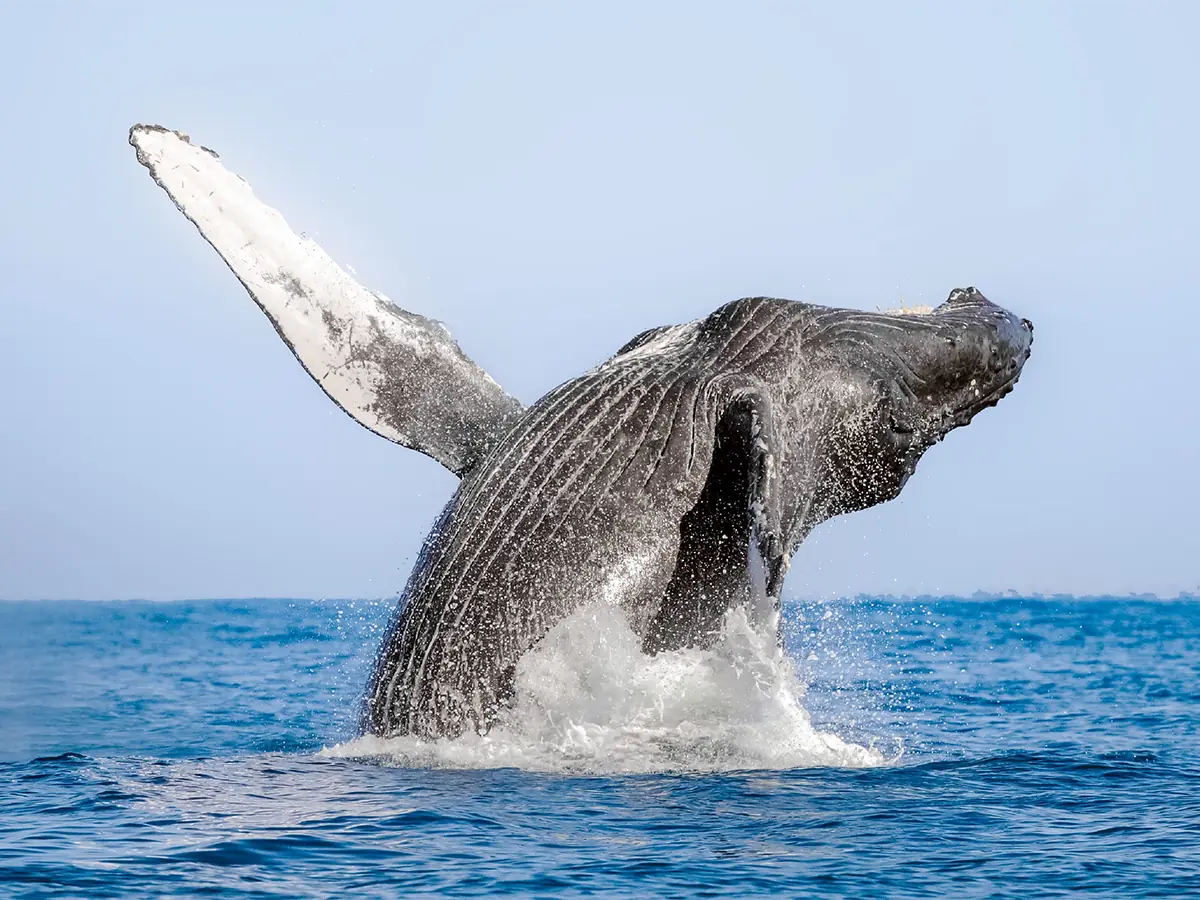
Puerto Vallarta · Seasonal humpback whale watching
Puerto Vallarta whale watching is about being present for a seasonal wildlife encounter without pushing too close. Choose a permitted operator, listen to the crew, and treat the day as observation—not a race for the closest possible whale.
Wildlife comes first
A considerate whale-watching trip respects the animals’ space, follows the crew’s lead, and keeps the boat’s behavior calm and predictable.
Browse tripsWhere the observation happens
Captains follow current conditions and sightings rather than a fixed loop. The most responsible itinerary leaves room to observe from a distance, move slowly, and change course when the animals need space.
Trip length varies by operator
Compare the departure marina, boat size, guide experience, seasonal calendar, and the operator’s wildlife-viewing policy before reserving a place.
Set by whale activity and conditions
Whale movement, wind, traffic, and visibility shape where a captain can responsibly observe. A thoughtful trip never promises a specific route or encounter.
A responsible whale-watching day
Good viewing is measured by calm animals, a careful captain, and enough distance for natural behavior to continue.
Ask whether the company is authorized for whale watching and how its crew trains guests on the water. A permit-aware team puts the animals and the group’s safety first.
Mexican guidance distinguishes permitted and non-permitted vessels and sets minimum approach distances. Your captain—not the guests—should make every approach decision.
Tails, blows, surface movement, and a calf staying close to its mother can be just as memorable as a breach. Never ask a crew to chase a performance.
Know where life jackets are, what the captain’s signals mean, and why guests should remain seated and quiet during a close observation.
Mexican guidance calls for a side or slightly rear approach, never cutting in front of whales or circling them. The boat should avoid abrupt speed and direction changes.
For authorized vessels, published Mexican guidance identifies a minimum of 60 meters for boats under 10 meters and 80 meters for medium and larger boats; non-permitted boats should remain 800 feet away. Captains must apply the current rules and conditions.
If whales change behavior, move away, or a mother and calf need space, a responsible captain slows down or departs. Swimming, snorkeling, diving, and other water sports do not belong near whales.
Whale watching safety and distance
The purpose of the rules is simple: keep whales behaving naturally and keep people safe on the water.
Ask the operator about its whale-watching authorization and its policy for mothers, calves, crowding, and changing conditions.
Published Mexican guidance limits the number of boats around the same whale or group. A captain should avoid adding pressure to an already busy observation area.
Do not swim, snorkel, scuba dive, paddle, or use personal watercraft near an identified whale group. Keep lines, trash, and loose objects out of the water.
Plan your day
Distance requirements depend on authorization and vessel size. Published Mexican guidance specifies at least 60 meters for authorized boats under 10 meters, 80 meters for medium/larger authorized boats, and 800 feet for non-permitted vessels.
No. Whale watching is a seasonal wildlife experience, and ethical operators should never promise a particular behavior or a close encounter.
No. Water activities near identified whale groups are unsafe and can disturb natural behavior. Stay on the boat and follow the captain’s instructions.
Browse the collection for real local trips as operators add their vessels, inclusions, group limits, departure details, and available dates.
Explore trips